
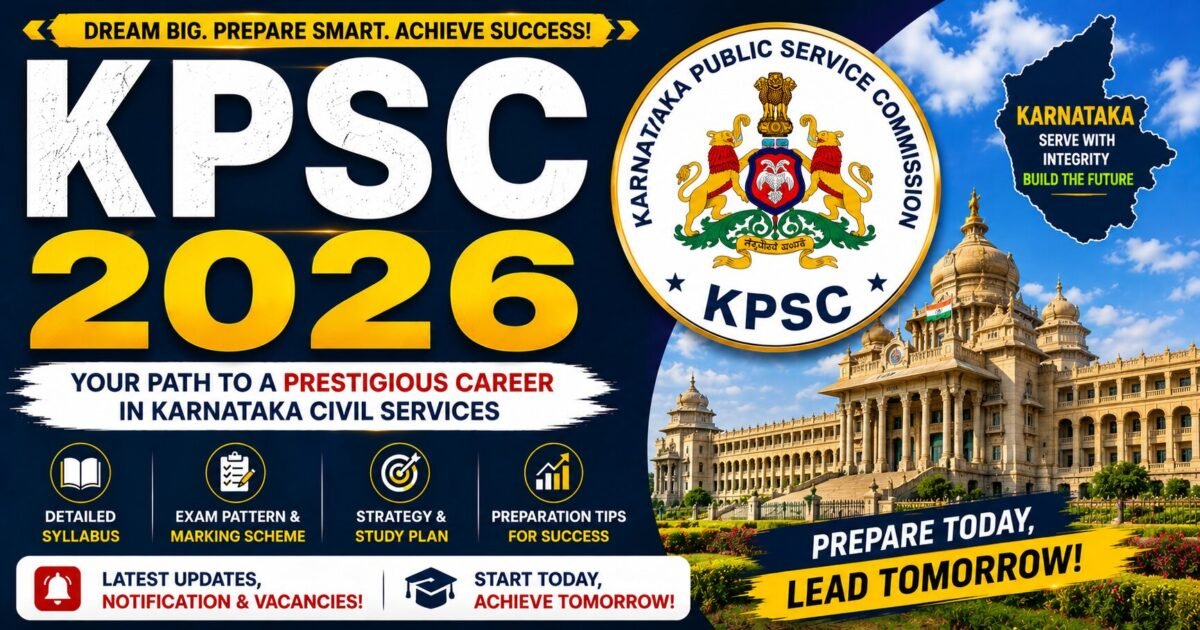
For many aspiring candidates from the state of Karnataka, KPSC 2026 is considered a golden opportunity to have a job in one of the most respectable government services and have a successful career. This examination, organized by the Karnataka Public Service Commission, offers employment opportunities in different categories of administrative and state government jobs.
Each year many graduate students appear for the Karnataka civil service exams, which makes preparation more crucial now than ever before. Awareness about the notification procedure, eligibility criteria, syllabus, age criteria, and other factors involved in the selection process will help the candidates to prepare themselves strategically. Irrespective of whether you are appearing for this exam for the first time or you are a hardcore aspirant looking for the best ranks, here is all you should know about the KPSC 2026 examination.
What is KPSC?
The Karnataka Public Service Commission (Karnataka PSC) is the constitutional body responsible for recruiting candidates for various state government departments and administrative services in Karnataka.
The commission conducts examinations for multiple posts, including:
- Karnataka Administrative Service (KAS)
- Group A Officers
- Group B Officers
- Assistant Commissioners
- Tahsildars
- Commercial Tax Officers
- Other state government positions
The examination process is designed to identify candidates with strong analytical abilities, administrative aptitude, and decision-making skills.
For candidates preparing for civil services, Karnataka PSC exams are considered among the most respected state-level competitive examinations.
KPSC 2026 Notification Overview
The official notification is the most important document for aspirants because it contains complete information regarding vacancies, eligibility, examination dates, application procedures, reservation policies, and selection stages.
The notification generally includes:
- Total vacancies
- Post-wise details
- Educational qualifications
- Age criteria
- Application process
- Examination schedule
- Syllabus and exam pattern
- Reservation guidelines
Candidates should carefully review the notification before submitting their applications to avoid mistakes that could lead to disqualification.
Why KPSC is a Popular Career Choice
Government jobs continue to attract aspirants because they provide stability, career growth, and opportunities to serve society.
Some major advantages include:
Job Security
State government positions offer long-term employment opportunities with structured career progression.
Attractive Salary Packages
Selected candidates receive competitive salaries along with various allowances and benefits.
Social Prestige
Administrative positions carry significant responsibility and respect within society.
Work-Life Balance
Many state government roles offer better work-life balance compared to private sector jobs.
Opportunities for Public Service
Candidates get the chance to contribute directly to governance and development initiatives.
These benefits make Karnataka civil services a preferred career option for many graduates.
KPSC 2026 Eligibility Criteria
Before applying, candidates must ensure they meet all eligibility requirements.
Educational Qualification
Applicants must possess a bachelor’s degree from a recognized university.
Eligible qualifications include:
- BA
- BSc
- BCom
- BBA
- BCA
- Engineering Degrees
- Professional Degrees
Final-year students may also be eligible depending on official notification guidelines.
Nationality
Applicants must be Indian citizens.
Physical Requirements
Certain posts may require candidates to meet specific physical standards as prescribed in recruitment rules.
Understanding eligibility beforehand helps candidates avoid application-related issues later.
Age Limit for KPSC 2026
Age eligibility plays a crucial role during the application process.
The exact age criteria may vary depending on the post category and reservation benefits.
General Category
Typically between:
- Minimum: 21 years
- Maximum: 35 years
OBC Category
Eligible candidates generally receive age relaxation.
SC/ST Category
Additional age relaxation is usually available according to government norms.
Other Reserved Categories
Relaxations may apply based on official recruitment policies.
Candidates should always verify the latest notification for updated age criteria.
Selection Process
The recruitment process generally consists of multiple stages designed to assess candidates comprehensively.
Preliminary Examination
This is the first screening stage.
The preliminary exam usually contains objective-type questions and serves as a qualifying examination.
Main Examination
Candidates who qualify for prelims proceed to the mains examination.
This stage evaluates:
- Analytical ability
- Subject knowledge
- Writing skills
- Administrative understanding
Personality Test
Qualified candidates appear for an interview conducted by the commission.
The interview assesses:
- Leadership qualities
- Communication skills
- Decision-making ability
- Administrative aptitude
Final selection is based on cumulative performance.
KPSC 2026 Exam Pattern
Understanding the exam structure is essential for effective preparation.
Preliminary Examination
The prelims generally include:
| Paper | Subject |
| Paper 1 | General Studies |
| Paper 2 | Aptitude & Mental Ability |
Questions are objective in nature.
Main Examination
The mains examination typically consists of descriptive papers covering:
- General Studies
- Essay Writing
- Governance
- Public Administration
- Current Affairs
- Optional Subjects (if applicable)
The descriptive format tests conceptual understanding and answer-writing ability.
Detailed KPSC 2026 Syllabus
A clear understanding of the syllabus is the foundation of successful preparation.
General Studies
Important topics include:
- Indian History
- Karnataka History
- Geography
- Indian Constitution
- Polity
- Governance
- Economics
- Science and Technology
- Environment
Current Affairs
Candidates should focus on:
- National events
- International developments
- Karnataka-specific issues
- Government schemes
- Economic updates
Mental Ability
Questions may include:
- Logical reasoning
- Numerical aptitude
- Data interpretation
- Analytical thinking
Essay Writing
Essay topics often test:
- Social awareness
- Administrative understanding
- Critical thinking
A balanced preparation strategy should cover all these areas comprehensively.
Best Preparation Strategy for KPSC 2026
Many candidates study hard but fail because they lack a structured plan.
A smart preparation strategy often produces better results than simply studying longer hours.
Understand the Syllabus Thoroughly
Begin by analyzing every topic in detail.
This helps eliminate unnecessary study material and keeps preparation focused.
Create a Realistic Study Plan
Divide your preparation into:
- Daily targets
- Weekly goals
- Monthly revisions
Consistency matters more than studying excessively for short periods.
Focus on Current Affairs
Current affairs play a significant role throughout the examination process.
Develop the habit of reading newspapers and reliable current affairs sources daily.
Practice Mock Tests
Mock tests help:
- Improve speed
- Enhance accuracy
- Build confidence
- Identify weaknesses
Regular testing is essential for competitive exams.
Improve Answer Writing
For mains preparation, answer-writing practice is critical.
Candidates should learn how to:
- Structure answers effectively
- Present arguments logically
- Write concise conclusions
Good presentation often improves scoring potential.
Common Mistakes Aspirants Should Avoid
Many candidates repeat the same mistakes during preparation.
Avoiding them can significantly improve your chances of success.
Ignoring the Syllabus
Studying random topics wastes valuable time.
Skipping Revision
Revision strengthens retention and improves recall during exams.
Over-Reliance on Multiple Sources
Using too many books creates confusion.
Neglecting Mock Tests
Practice tests simulate real exam conditions.
Poor Time Management
Without proper planning, candidates struggle to complete the syllabus.
Recognizing these mistakes early can save months of preparation effort.
Recommended Study Resources
Choosing quality resources simplifies preparation.
Standard Books
Candidates should select trusted books for:
- History
- Geography
- Polity
- Economics
- Science
Current Affairs Sources
Reliable newspapers and monthly compilations are highly beneficial.
Previous Year Papers
Past papers help understand:
- Question trends
- Difficulty level
- Important topics
Online Learning Platforms
Digital resources can supplement traditional preparation methods effectively.
Importance of Coaching for KPSC Preparation
While self-study remains important, many aspirants benefit from professional guidance.
A structured coaching environment provides:
- Expert mentorship
- Study plans
- Regular tests
- Performance analysis
- Doubt-clearing sessions
For candidates seeking systematic preparation, experienced civil services coaching institutes can help streamline the learning process.
Websites such as IAS Coaching Delhi provide educational guidance, exam-related information, and preparation resources designed to support aspirants throughout their journey.
Time Management Tips for Working Professionals
Many candidates prepare alongside jobs or academic commitments.
Prioritize Important Topics
Focus on high-weightage areas first.
Use Weekends Wisely
Reserve weekends for extensive revision and mock tests.
Study Consistently
Even two to three focused hours daily can produce excellent results over time.
Avoid Burnout
Maintaining a healthy routine improves productivity and concentration.
Consistency remains the key factor for success.
Career Opportunities After KPSC
Successful candidates can enter various departments within the Karnataka government.
Potential roles include:
- Administrative Officers
- Revenue Officers
- Assistant Commissioners
- Commercial Tax Officers
- Development Officers
- Departmental Administrators
These positions offer growth opportunities and meaningful responsibilities throughout a candidate’s career.
Why Early Preparation Matters
Competition continues to increase every year.
Candidates who begin preparation early gain several advantages:
- Better syllabus coverage
- Multiple revision cycles
- Stronger conceptual understanding
- Improved answer-writing skills
- Greater confidence
Starting early allows aspirants to prepare without unnecessary pressure.
Rather than rushing during the final months, candidates can build knowledge gradually and systematically.
Conclusion
KPSC 2026 exam is an amazing platform that provides aspirants the chance to bag coveted positions within the Karnataka government service. However, it goes beyond mere effort and involves a certain degree of strategy on the part of candidates.
It is essential to take into consideration such factors as eligibility requirements, age limit, thorough knowledge of the syllabus, examination pattern and, finally, revision. Those who pay attention to all these aspects have a greater chance of becoming a successful candidate.
The KPSC 2026 exam may turn out to be much more achievable if you use the right methodological approach.
FAQs
Q.1 What is KPSC 2026?
KPSC 2026 refers to the Karnataka Public Service Commission recruitment examinations conducted for various administrative and government posts in Karnataka.
Q.2 What is the minimum educational qualification required?
Candidates generally need a bachelor’s degree from a recognized university to apply for most posts.
Q.3 What is the age limit for KPSC exams?
The age limit usually starts from 21 years, with upper age limits varying according to category and reservation benefits.
Q.4 How many stages are there in the selection process?
The recruitment process typically includes Preliminary Examination, Main Examination, and Personality Test/Interview.
Q.5 Is coaching necessary for KPSC preparation?
Coaching is not mandatory, but many aspirants find structured guidance, test series, and mentorship beneficial.
Q.6 Which subjects are important for preparation?
General Studies, Current Affairs, Polity, History, Geography, Economics, and Aptitude are among the most important areas.
Q.7 How much time is required to prepare for KPSC?
Preparation time varies by individual, but most successful candidates dedicate several months of consistent study.
Q.8 Can working professionals prepare for KPSC?
Yes. With proper planning, time management, and regular study schedules, working professionals can prepare effectively for the examination.