
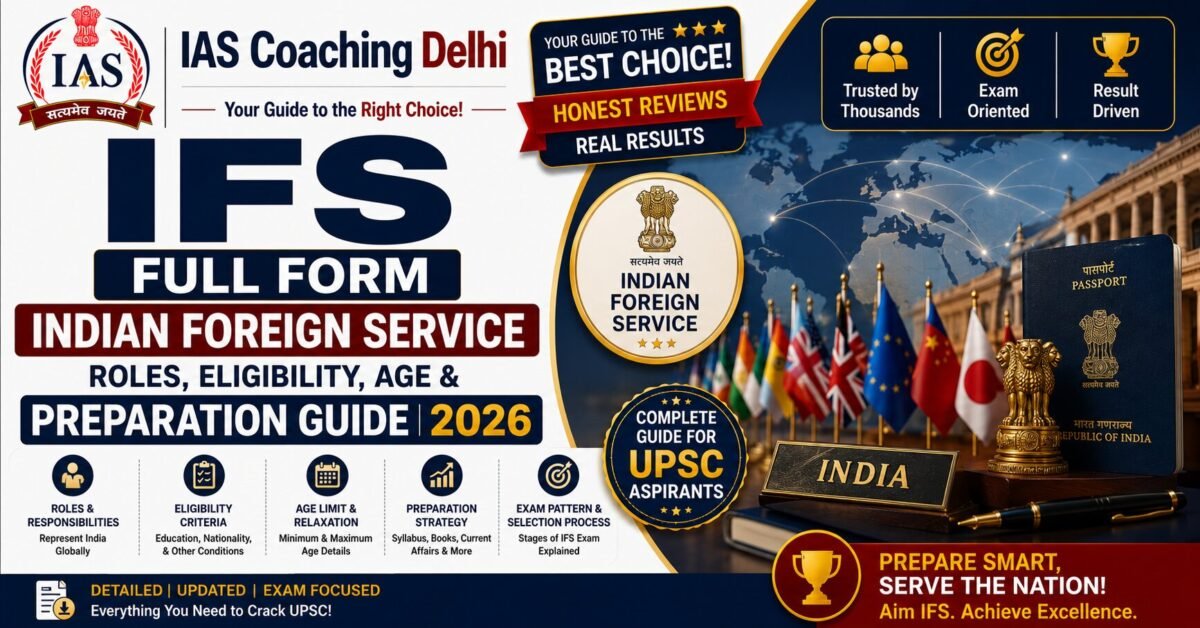
When it comes to representing India in the international community and establishing yourself with a dignified career in diplomacy, then the very first thing that comes to mind is the knowledge of the full form of IFS. The Indian Foreign Service is one of the most prestigious services among all those covered in the UPSC Civil Services Examination. With this service, you will be able to work with international bodies and Indian embassies as well as other countries as part of India’s foreign policy and international relations.
Each year, many UPSC aspirants try their luck for this service, and it becomes difficult for only a few to make it due to their determination and proper approach. However, when it comes to making a career as an IFS officer in 2026, you should keep in mind some important things.
What is the IFS Full Form?
The IFS Full Form is Indian Foreign Service. It is one of the premier Group A civil services of the Government of India, responsible for managing the country’s diplomatic, consular, and international affairs.
IFS officers work under the Ministry of External Affairs (MEA) and represent India across the world. Their responsibilities include strengthening diplomatic relations, protecting India’s interests abroad, promoting trade and investment, assisting Indian citizens overseas, and participating in international negotiations.
Unlike many other civil services, this career provides an opportunity to work in different countries and interact with global leaders, making it one of the most sought-after services among UPSC aspirants.
Why Do Thousands of Aspirants Choose the Indian Foreign Service?
The Indian Foreign Service is more than just a government job. It offers a unique blend of public service, international exposure, and professional growth.
Some of the major reasons aspirants choose this career include:
- Opportunity to represent India internationally
- Prestigious government position
- Attractive salary and overseas allowances
- International postings
- Excellent career progression
- Exposure to global diplomacy
- Opportunities to work with international organizations
- High social recognition
For students preparing for UPSC, understanding the responsibilities and career prospects helps in deciding whether this service aligns with their long-term goals.
Roles and Responsibilities of an IFS Officer
An IFS officer performs a wide range of responsibilities depending on the posting and designation. Their work directly contributes to India’s diplomatic relations and foreign policy.
Key Responsibilities Include
- Representing India in foreign countries
- Protecting India’s strategic interests
- Strengthening diplomatic relations
- Assisting Indian citizens abroad
- Negotiating international agreements
- Promoting trade and investment opportunities
- Reporting political and economic developments
- Supporting cultural exchange programs
Apart from these responsibilities, officers also coordinate with international organizations and help maintain India’s image on the global stage.
IFS Eligibility Criteria 2026
Before beginning your preparation, it is important to understand the eligibility requirements for the UPSC Civil Services Examination.
Educational Qualification
Candidates must possess a bachelor’s degree from a recognized university. Students in their final year of graduation are also eligible to apply, provided they meet the required conditions during the selection process.
Nationality
For the Indian Foreign Service, candidates must be citizens of India as per UPSC eligibility guidelines.
Number of Attempts
The number of attempts varies according to the candidate’s category.
Generally:
| Category | Maximum Attempts |
| General | 6 |
| OBC | 9 |
| SC/ST | Unlimited (within age limit) |
| EWS | 6 |
Candidates should always refer to the latest UPSC notification for updated eligibility conditions.
IFS Age Limit 2026
Meeting the prescribed age criteria is equally important.
The general age requirements are:
| Category | Age Limit |
| General | 21–32 Years |
| OBC | Up to 35 Years |
| SC/ST | Up to 37 Years |
| PwBD | As per UPSC Rules |
Age relaxation is provided according to the latest government regulations. Candidates should verify official notifications before submitting their application.
Selection Process for the Indian Foreign Service
Many aspirants search for the IFS Full Form, but understanding the selection process is equally important.
Selection is conducted through the UPSC Civil Services Examination, which consists of three stages.
Stage 1 – Preliminary Examination
The Preliminary Examination serves as the screening stage.
It includes:
- General Studies Paper I
- CSAT (General Studies Paper II)
Candidates who qualify move to the next stage.
Stage 2 – Mains Examination
The Mains Examination evaluates analytical ability, writing skills, and subject knowledge.
It includes:
- Essay
- General Studies Papers
- Optional Subject Papers
- Language Papers
Strong answer-writing skills are essential for securing high marks.
Stage 3 – Personality Test
Candidates clearing the written examination appear for the UPSC Personality Test.
The interview assesses:
- Communication skills
- Leadership qualities
- Decision-making ability
- Awareness of national and international issues
- Overall personality
The final merit list is prepared by combining marks from the Mains Examination and the Personality Test.
Skills Required to Become an IFS Officer
Success in the Indian Foreign Service requires much more than academic knowledge.
Candidates should develop:
- Strong communication skills
- Leadership qualities
- Analytical thinking
- Decision-making ability
- Emotional intelligence
- International awareness
- Negotiation skills
- Confidence under pressure
Developing these skills during UPSC preparation helps aspirants perform better in both the written examination and the interview.
How to Start Preparing for the Indian Foreign Service
A structured preparation strategy significantly improves your chances of success.
Begin by understanding the complete UPSC syllabus and exam pattern. Build strong fundamentals using standard books before moving to advanced resources. Regular newspaper reading, current affairs analysis, answer-writing practice, and mock tests should become part of your daily routine.
Instead of following multiple sources, focus on a limited number of reliable resources and revise them consistently. A disciplined study schedule is far more effective than studying long hours without proper planning.
Choose the Right Guidance for UPSC Preparation
Preparing for the Civil Services Examination requires consistency, proper mentorship, and a well-planned strategy. While self-study remains essential, many aspirants benefit from expert guidance that helps them stay focused and avoid common preparation mistakes.
When selecting a coaching institute, consider factors such as experienced faculty, updated study material, answer-writing practice, mentorship, test series, and personalized support. A trusted platform like IAS Coaching Delhi helps aspirants compare leading UPSC coaching institutes, courses, fee structures, and student reviews, making it easier to choose the right preparation path based on individual goals.
Selecting the right guidance at the beginning of your UPSC journey can save valuable time and help you prepare with greater confidence.
Career Growth After Becoming an IFS Officer
One of the biggest reasons aspirants aim for the Indian Foreign Service is its excellent career progression. From the initial training period to senior diplomatic positions, every stage offers new responsibilities and opportunities to represent India globally.
A newly selected officer begins training at the Lal Bahadur Shastri National Academy of Administration (LBSNAA), followed by specialized training under the Ministry of External Affairs. After completing the training, officers are posted in India and later at Indian embassies, consulates, and diplomatic missions across the world.
A typical career path includes:
- Officer Trainee
- Third Secretary
- Second Secretary
- First Secretary
- Counsellor
- Minister
- Ambassador or High Commissioner
- Foreign Secretary (Senior Position)
The promotion timeline depends on performance, seniority, and government policies. Throughout their career, officers gain valuable international exposure while handling important diplomatic assignments.
Salary and Benefits of an IFS Officer
Apart from prestige, the Indian Foreign Service offers an attractive salary package and numerous government benefits. The exact salary depends on the officer’s rank, posting, and experience.
Some common benefits include:
- Competitive government salary
- Foreign allowance for overseas postings
- Official accommodation
- Government vehicle (as per post)
- Medical facilities
- Children’s education support abroad
- Travel allowances
- Pension and retirement benefits
During foreign postings, officers may also receive additional allowances based on the country where they are serving. These benefits make the service one of the most rewarding career options under the UPSC Civil Services Examination.
Best Strategy to Prepare for IFS in 2026
Clearing the Civil Services Examination requires a smart strategy rather than simply studying for long hours. Candidates targeting the Indian Foreign Service should focus equally on conceptual understanding, answer writing, and current affairs.
A practical preparation strategy includes:
Build Strong Fundamentals
Start with the NCERT books before moving to advanced UPSC resources. A strong foundation helps in understanding complex topics more easily.
Follow a Limited Set of Resources
Avoid collecting too many books. Instead, revise a few reliable resources multiple times.
Practice Answer Writing
Writing quality answers consistently improves presentation skills and analytical thinking, both of which are crucial for UPSC Mains.
Stay Updated with Current Affairs
International relations, diplomacy, global organizations, and India’s foreign policy are particularly important for aspirants interested in the Indian Foreign Service.
Attempt Mock Tests
Regular mock tests improve speed, accuracy, and confidence while helping identify weak areas before the actual examination.
Common Mistakes Aspirants Should Avoid
Many capable candidates fail not because of lack of knowledge but because of avoidable mistakes during preparation.
Some common mistakes include:
- Ignoring the UPSC syllabus
- Studying from too many sources
- Skipping answer-writing practice
- Poor revision habits
- Neglecting current affairs
- Lack of consistency
- Focusing only on Prelims preparation
- Ignoring personality development
Avoiding these mistakes can significantly improve your overall preparation and exam performance.
Why the Indian Foreign Service is a Dream Career
The Indian Foreign Service offers much more than a government designation. It gives individuals the opportunity to represent India internationally while contributing to diplomacy, international cooperation, and foreign policy.
Apart from professional growth, officers enjoy global exposure, multicultural experiences, and opportunities to work on matters of national importance. For candidates passionate about international relations and public service, it remains one of the most respected career options available through the UPSC Civil Services Examination.
Why Choose IAS Coaching Delhi for UPSC Preparation?
Success in the UPSC examination depends on consistent preparation, expert mentorship, and choosing reliable guidance. IAS Coaching Delhi has become a trusted platform for aspirants looking to compare the best UPSC coaching institutes, explore course details, check fee structures, and read authentic coaching reviews before making a decision.
The platform helps students make informed choices by providing updated information on leading IAS coaching institutes, preparation strategies, study resources, and exam guidance. Whether you are preparing for the Civil Services Examination for the first time or looking for the right coaching institute, IAS Coaching Delhi offers valuable insights to support your preparation journey.
Conclusion
The IFS full form is just the first step in the long way towards becoming a member of the most respected civil services of the country. The aspirants who want to join as Indian Foreign Service officer should have perseverance and well-disciplined preparation. It should be accompanied by complete knowledge regarding the process of appearing for UPSC examination.
If you are passionate about making a career in the field of diplomacy and international relations, begin your preparation from the very start. With proper planning and assistance, you can achieve your goal of serving the nation through the Indian Foreign Service.
Frequently Asked Questions
Q.1 What is the IFS Full Form?
The IFS Full Form is Indian Foreign Service, one of the prestigious civil services recruited through the UPSC Civil Services Examination.
Q.2 What is the age limit for the Indian Foreign Service?
Candidates must generally be between 21 and 32 years of age, with relaxation available for reserved categories as per UPSC rules.
Q.3 Can I become an IFS officer after graduation?
Yes. Candidates with a bachelor’s degree from a recognized university can apply for the UPSC Civil Services Examination if they meet the eligibility criteria.
Q.4 Is coaching necessary for IFS preparation?
Coaching is optional. However, expert guidance, structured study plans, and regular mock tests can help many aspirants prepare more effectively.
Q.5 Which subjects are important for IFS preparation?
Candidates should focus on the complete UPSC syllabus, including General Studies, Current Affairs, Essay, Optional Subject, and answer-writing practice. International Relations is especially important for aspirants interested in the Indian Foreign Service.