
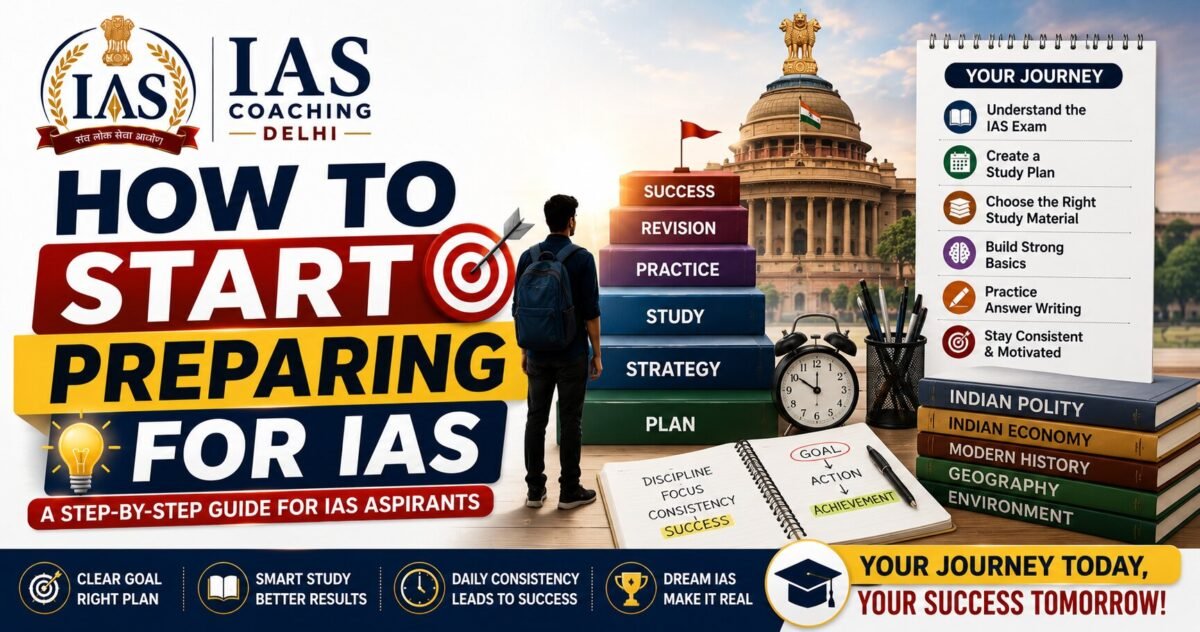
Year after year, there are numerous individuals who start their IAS Preparation with the goal of serving the nation by appearing for the Civil Services Examination. Although the aspiration is shared by many, it is only those who adopt the right Preparing for IAS approach from day one who are successful. Instead of buying an unlimited number of books or taking advice from any random website, the very first thing one should do is create a preparation schedule according to the most recent pattern of the UPSC exam.
The proper guidance provided in the initial stages not only helps save time but also helps keep focused throughout the process of preparation. Whether you are a college-going student, an office-goer, or a recent graduate, starting your preparation with a proper guide will always add value.
Why Starting IAS Preparation with the Right Strategy Matters
The UPSC Civil Services Examination is known for its vast syllabus and highly competitive nature. Many aspirants fail not because they lack potential, but because they start without a proper plan. Jumping from one study source to another often leads to confusion, incomplete preparation, and wasted time.
A well-planned strategy helps you understand the syllabus, prioritize important topics, and create realistic study goals. Instead of studying everything at once, you can focus on one subject at a time while maintaining consistency. This approach not only improves learning but also reduces stress during Preparing for IAS.
Students who begin with a structured roadmap are generally better prepared for both the Preliminary and Mains examinations. They develop stronger concepts, improve answer-writing skills, and build the confidence needed to perform well in the examination.
Is This the Right Time to Start IAS Preparation?
One of the biggest questions among aspirants is when they should begin preparing for the Civil Services Examination. The simple answer is that the best time depends on your current stage of education and career.
If you are in college, starting your preparation early gives you enough time to understand the syllabus and strengthen your basics. Graduates often have the advantage of dedicating more time to full-time preparation. Working professionals can also succeed by following a disciplined study schedule and utilizing weekends effectively.
The important thing is not your age but your commitment. A focused preparation strategy, combined with consistency and smart planning, can make a significant difference regardless of when you begin.
Understand the UPSC Exam Before You Start
Before purchasing study material or joining a coaching institute, every aspirant should understand how the Civil Services Examination is conducted. A clear understanding of the exam structure helps you prepare more effectively and avoid unnecessary distractions.
The UPSC examination consists of three stages:
Preliminary Examination
The first stage is an objective-type examination that tests conceptual understanding, current affairs awareness, and analytical ability. Qualifying this stage is essential to move forward.
Mains Examination
The second stage focuses on descriptive writing. Candidates are expected to present balanced, analytical, and well-structured answers. Strong writing skills and conceptual clarity play a crucial role here.
Personality Test
The final stage evaluates communication skills, decision-making ability, confidence, and overall personality. It is not merely an interview but an assessment of your suitability for administrative responsibilities.
Understanding these stages allows you to build a Preparing for IAS strategy that covers every aspect of the examination instead of focusing on only one phase.
Build a Smart IAS Preparation Roadmap
One of the biggest mistakes beginners make is collecting too many books and resources. Successful aspirants usually follow a limited number of trusted resources and revise them multiple times instead of constantly changing study material.
A practical preparation roadmap should include:
- Understanding the complete UPSC syllabus
- Reading the latest exam pattern
- Selecting standard reference books
- Following daily current affairs
- Making concise revision notes
- Solving previous year question papers
- Practicing answer writing regularly
Following a structured roadmap helps you stay disciplined and prevents information overload.
Choose the Right Guidance for Faster Progress
Self-study plays an important role in UPSC success, but expert guidance can make your preparation more organized and efficient. A good coaching institute helps aspirants understand complex topics, provides structured study material, and offers regular evaluation.
When choosing a coaching institute, look beyond advertisements. Focus on teaching quality, mentorship, answer-writing support, and student guidance. Institutes with experienced faculty and a systematic learning approach often help students stay motivated throughout their preparation.
If you’re looking for structured coaching, IAS Coaching Delhi has been guiding Civil Services aspirants with a team of experienced mentors, comprehensive study material, and a student-focused learning approach. With expert academic support and personalized guidance, aspirants can prepare with greater confidence and clarity.
Create a Study Plan That You Can Follow
Many students prepare impressive timetables but fail to follow them after a few days. Instead of creating an unrealistic schedule, prepare a study plan that fits your daily routine and learning pace.
A balanced study plan should include time for:
- Static subjects
- Current affairs
- Revision
- Practice questions
- Newspaper reading
- Weekly mock tests
Consistency is more valuable than studying for long hours occasionally. Even six to eight focused hours every day can produce excellent results when followed consistently.
Focus on NCERT Books Before Advanced Resources
Most successful candidates recommend starting with NCERT books because they build strong conceptual foundations. These books explain topics in simple language and help you understand fundamental concepts before moving to advanced reference materials.
Begin with subjects like:
- History
- Geography
- Polity
- Economics
- Science
- Environment
After completing NCERTs, gradually move towards standard UPSC reference books. This step-by-step approach makes advanced topics much easier to understand.
Develop a Habit of Reading Current Affairs Daily
Current affairs play an important role in every stage of the Civil Services Examination. Instead of depending only on monthly magazines, develop the habit of reading a reliable newspaper every day.
While reading, focus on:
- Government policies
- International relations
- Economy
- Environment
- Science and Technology
- Social issues
Avoid spending excessive time on political debates or entertainment news. Your objective should be to understand issues rather than memorize headlines.
Making short notes while reading can significantly reduce revision time before the examination.
Start Answer Writing Earlier Than You Think
Many beginners postpone answer-writing practice until after completing the syllabus. This is one of the biggest mistakes in UPSC preparation.
Answer writing is a skill that improves gradually through regular practice. Start with simple questions, learn how to structure your answers, and gradually improve your presentation.
A good answer should have:
- A clear introduction
- Logical explanation
- Relevant examples
- Balanced analysis
- A meaningful conclusion
Regular feedback from experienced mentors can help you identify mistakes and improve your writing style.
Avoid Common Mistakes During IAS Preparation
Many aspirants lose valuable time because of avoidable mistakes. Recognizing these early can improve your preparation journey.
Some common mistakes include:
- Using too many study materials
- Ignoring revision
- Not practicing mock tests
- Delaying answer writing
- Following multiple strategies simultaneously
- Comparing your preparation with others
Remember that UPSC preparation is a marathon, not a sprint. Staying consistent is far more important than studying excessively for a few days.
Choose the Best Books for IAS Preparation
Selecting the right study material is one of the most important decisions during your UPSC journey. Many beginners waste valuable time collecting too many books instead of mastering a few trusted resources. Remember, quality always matters more than quantity.
For effective Preparing for IAS, start with NCERT books to build your fundamentals and then move to standard reference books recommended by experts. Along with books, make use of government reports, current affairs magazines, and previous years’ question papers.
A balanced resource list generally includes:
- NCERT Books (Class 6–12)
- Indian Polity by M. Laxmikanth
- Indian Economy by Ramesh Singh
- Spectrum Modern History
- GC Leong Geography
- The Hindu or The Indian Express
- PIB and Government Reports
- UPSC Previous Year Papers
Instead of changing resources frequently, revise the same material multiple times. Consistent revision helps retain concepts and improves confidence before the examination.
How Professional Coaching Can Strengthen Your Preparation
Many aspirants begin their journey through self-study but eventually realize the importance of expert guidance. While coaching is not mandatory, it can significantly reduce confusion by providing a structured roadmap.
A professional coaching institute helps students:
- Understand the latest UPSC pattern
- Complete the syllabus systematically
- Practice answer writing regularly
- Stay updated with current affairs
- Improve through mock tests
- Receive mentorship from experienced faculty
Guidance becomes even more valuable when preparing for the Mains examination and the Personality Test, where presentation, analytical thinking, and communication skills matter as much as knowledge.
Choosing the right coaching support can help you avoid common mistakes and stay focused throughout your preparation.
Why Choose IAS Coaching Delhi?
Finding the right learning environment is just as important as choosing the right books. IAS Coaching Delhi has become a trusted platform for aspirants looking for reliable information and quality guidance for Civil Services Examination preparation.
With an experienced academic team, updated study resources, and a student-centric approach, the platform helps aspirants prepare strategically rather than relying on guesswork. The focus is on conceptual clarity, answer-writing improvement, current affairs integration, and continuous performance evaluation.
What Makes IAS Coaching Delhi a Preferred Choice?
- Experienced UPSC mentors
- Well-structured learning programs
- Comprehensive study material
- Regular mock tests and performance analysis
- Answer-writing practice
- Current affairs support
- Personalized guidance for aspirants
- Student-focused preparation strategy
Whether you are starting from scratch or preparing for another attempt, structured guidance can help you prepare with greater confidence and discipline.
Online vs Offline IAS Coaching – Which One Should You Choose?
Today, aspirants have the flexibility to choose between classroom coaching and online learning. Both options have their own advantages.
Online Coaching
Online learning is suitable for:
- Working professionals
- College students
- Aspirants living outside Delhi
- Candidates looking for flexible schedules
Benefits include:
- Live and recorded classes
- Study from anywhere
- Easy access to digital resources
- Flexible revision
Offline Coaching
Classroom coaching is beneficial for students who prefer direct interaction with faculty and peer learning.
Advantages include:
- Face-to-face mentoring
- Better classroom discipline
- Immediate doubt resolution
- Competitive learning environment
Choose the mode that matches your learning style rather than following trends.
Time Management is the Key to Success
One of the biggest challenges in Preparing for IAS is managing time effectively. Since the syllabus is extensive, every hour should be utilized wisely.
Create a daily schedule that includes:
- Subject study
- Current affairs
- Revision
- Answer writing
- Practice questions
- Newspaper reading
Avoid studying continuously for long hours without breaks. Short, focused study sessions with regular revision often produce better results than marathon study schedules.
Consistency over several months is far more effective than last-minute preparation.
Mock Tests and Revision Should Never Be Ignored
Many aspirants complete the syllabus but fail to revise properly. Revision is what transforms information into long-term knowledge.
Regular mock tests help you:
- Identify weak areas
- Improve accuracy
- Manage examination pressure
- Increase speed
- Build confidence
Similarly, revision strengthens conceptual understanding and reduces the chances of forgetting important topics.
Experts often recommend revising every subject multiple times before the examination instead of continuously adding new resources.
Develop the Right Mindset for UPSC Success
Preparing for the Civil Services Examination is not only an academic challenge but also a test of patience and discipline.
Every aspirant experiences setbacks, low scores, and periods of self-doubt. The key is to stay consistent and trust your preparation process.
Maintain a healthy routine by:
- Getting enough sleep
- Exercising regularly
- Taking short breaks
- Avoiding unnecessary distractions
- Staying positive
Remember that every successful IAS officer once started as a beginner with the same uncertainties.
IAS Preparation Checklist
Before starting your preparation, make sure you have:
- Understood the UPSC syllabus
- Selected standard study material
- Created a realistic study timetable
- Started reading current affairs daily
- Begun answer-writing practice
- Planned regular revision
- Enrolled for guidance if required
- Solved previous year question papers
- Started mock test practice
- Maintained consistency in studies
Following this checklist can help you stay organized and focused throughout your preparation journey.
Conclusion
Choosing the right strategy for beginning your IAS preparation could definitely organize your way of preparing in a much productive manner. It is better to choose the path of strengthening your fundamentals, preparing with a proper plan, practicing answer writing, and revising in an effective manner than using unstructured resources. Each small step that you take today would lead you to become a civil servant one day.
If you seek expert guidance and mentoring along with structured preparations, then it is best to get yourself enrolled at IAS Coaching in Delhi. Here, the aspirants would get the required guidance from experts in addition to having proper updated study material.
Frequently Asked Questions
Q.1 How should beginners start Preparing for IAS?
Beginners should first understand the UPSC syllabus, select standard study material, read current affairs daily, and follow a structured study plan.
Q.2 Is coaching necessary Preparing for IAS?
Coaching is not compulsory, but expert guidance can simplify preparation by providing structured learning, mentorship, and regular evaluation.
Q.3 Which books are best Preparing for IAS?
Start with NCERT books and then move to standard references such as M. Laxmikanth for Polity, Spectrum for History, and Ramesh Singh for Economy.
Q.4 How many hours should I study for UPSC?
Quality matters more than quantity. A consistent schedule of 6–8 focused hours with regular revision is generally more effective than irregular long study sessions.
Q.5 Why choose IAS Coaching Delhi for UPSC preparation?
IAS Coaching Delhi provides experienced mentors, structured guidance, quality study material, mock tests, and personalized support to help aspirants prepare strategically for the Civil Services Examination.