
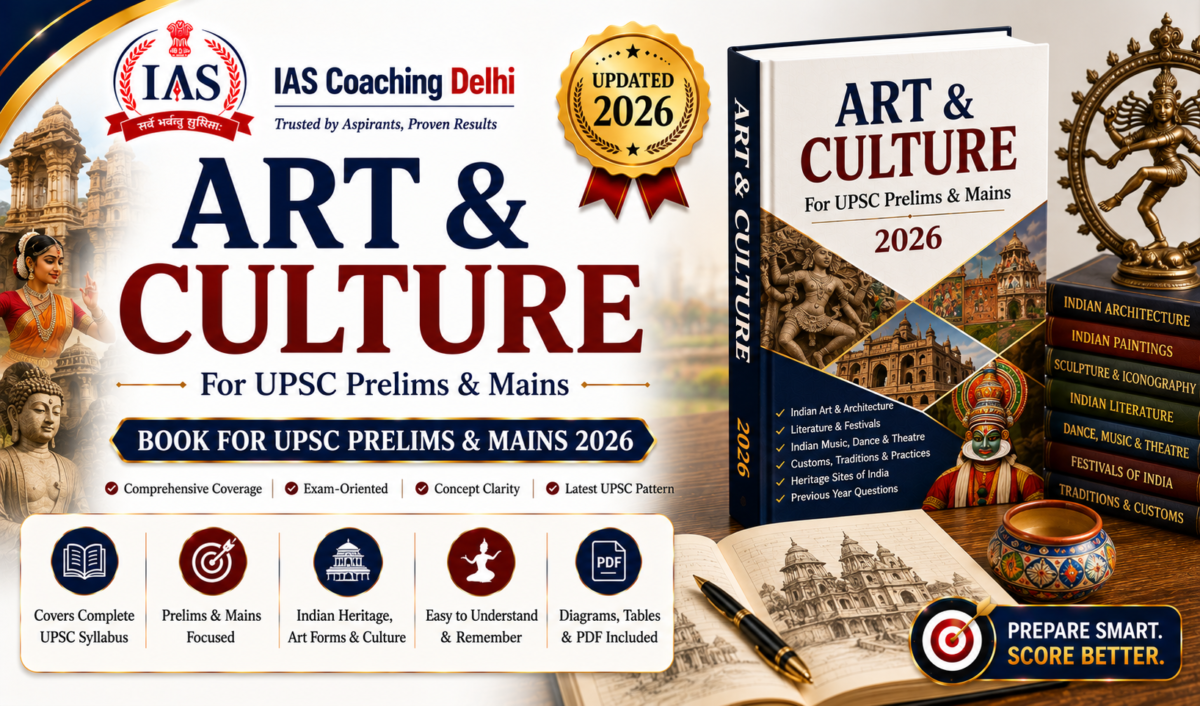
Preparing for the UPSC Civil Services exam can feel overwhelming, especially when you look at the vast syllabus of Indian heritage. Choosing the right Art & Culture Book makes this entire process much easier and helps you score higher marks in both Prelims and Mains 2026.
Many candidates make the mistake of reading too many sources. Instead, you need a clear strategy and one reliable Indian Art and Culture Book that covers everything without confusing you.
In this guide, we will break down the top recommended books, show you how to study them step by step, and share practical tips from experienced toppers.
Why Art and Culture Matters for UPSC 2026
Art and Culture plays a direct role in clearing both stages of the exam.
- UPSC Prelims: You can expect around 4 to 8 questions every year. These usually focus on temple architecture, classical dances, ancient schools of philosophy, and historical sites.
- UPSC Mains (GS Paper 1): Questions here carry 25 to 40 marks. They ask you to explain the cultural importance of ancient and medieval Indian developments.
When you use a quality Art & Culture Book, you build the exact conceptual clarity needed to answer these questions confidently.
Top Recommended Art & Culture Book Options
You do not need to buy ten different books. You only need a few trusted sources to cover the complete UPSC Art & Culture Preparation.
1. Essential Basic Books
- Class 11 NCERT: An Introduction to Indian Art (Part 1) – This is the best starting point for every beginner.
- Class 11 NCERT: Living Craft Traditions of India – Good for basic understanding of Indian crafts.
2. Standard Reference Books
- Nitin Singhania Book: Indian Art and Culture – The primary reference choice for almost every UPSC aspirant.
- CCRT Official Website: A great free online resource by the Indian Government for authentic cultural facts.
Nitin Singhania Book: Is It Worth It?
The Nitin Singhania Book is widely considered the ultimate guide for this subject. It organises complex topics into simple sub-topics with illustrations and maps.
Why Students Love This Book:
- All-in-One Resource: You do not have to search for extra notes elsewhere.
- Visual Diagrams: Includes flowcharts and pictures that help you remember architecture and art forms easily.
- Practice Questions: Contains previous year questions at the end of every chapter.
A Quick Tip for Beginners:
The book is detailed and quite thick. Do not try to memorize everything on your first reading. First, read basic NCERTs so you do not get overwhelmed.
NCERT vs Reference Books
Should you read only NCERTs or rely entirely on a standard reference book? Here is a simple comparison:
| Feature | NCERT (Class 11 Fine Arts) | Nitin Singhania Reference Book |
| Language | Very simple and story-like | Informative and detailed |
| Purpose | Builds basic concepts and interest | Covers full syllabus for Prelims & Mains |
| Time Needed | 1 to 2 weeks | 3 to 4 weeks |
| When to Read | Read this first | Read after finishing NCERT |
Simple 4-Step Preparation Strategy
Follow this simple routine to prepare your UPSC Art and Culture Notes and master the topic efficiently:
- Understand the Syllabus: Divide topics into visual arts (architecture, paintings), performing arts (dances, music), and literature/philosophy.
- Start with NCERTs: Read Class 11 An Introduction to Indian Art to build your base.
- Move to Your Main Book: Read your chosen Art & Culture Book and highlight important points like patron kings, dynasties, and features.
- Solve Past Papers: Solve the last 10 years of Prelims MCQs and practice writing answers for Mains.
Common Mistakes to Avoid
- Buying Too Many Books: Stick to one standard book and revise it multiple times.
- Ignoring Current News: UPSC often asks questions about cultural sites or festivals recently mentioned in newspapers.
- Forgetting Revision: Cultural facts fade quickly from memory if you do not revise weekly.
UPSC 2026 Revision Checklist
Use this quick checklist to track your progress:
- Complete Class 11 Fine Arts NCERT.
- Cover main chapters in your Indian Art and Culture Book.
- Make 1-page notes for classical dances and temple styles.
- Solve past 10 years of UPSC Prelims Art and Culture questions.
- Practice 10 to 15 Mains answer writing questions.
Frequently Asked Questions (FAQs)
Q1. Which is the best Art & Culture Book for UPSC 2026?
The standard recommendation is Indian Art and Culture by Nitin Singhania along with the Class 11 Fine Arts NCERT.
Q2. Can I skip Art and Culture for UPSC Prelims?
Skipping this topic is risky. You can easily score 10 to 15 marks in Prelims if you master the basic architectural styles and major historical movements.
Q3. Do I need to read CCRT material if I already have a standard Art & Culture Book?
No, you do not need to read CCRT separately if you are using the Nitin Singhania book. The book already covers all key information from CCRT. However, you can visit the official CCRT website occasionally to view high-quality images of classical dances and instruments.
Q4. How do I remember all the static facts easily?
Use flowcharts, draw simple sketches, and revise your short notes at least once every week.
Q5. How many times should I revise my Art & Culture Book before Prelims 2026?
You should revise your main book and short notes at least 3 to 4 times before the exam. Since this subject contains many factual details like dynasty names and architectural styles, regular weekly revision helps you retain facts easily.
Conclusion
Preparing for Art & Culture does not have to be difficult. Once you pick the right Art & Culture Book and stick to a clean revision schedule, you will feel far more confident in your tests.
Focus on understanding the concepts first, practice past year questions regularly, and keep your sources minimal!