
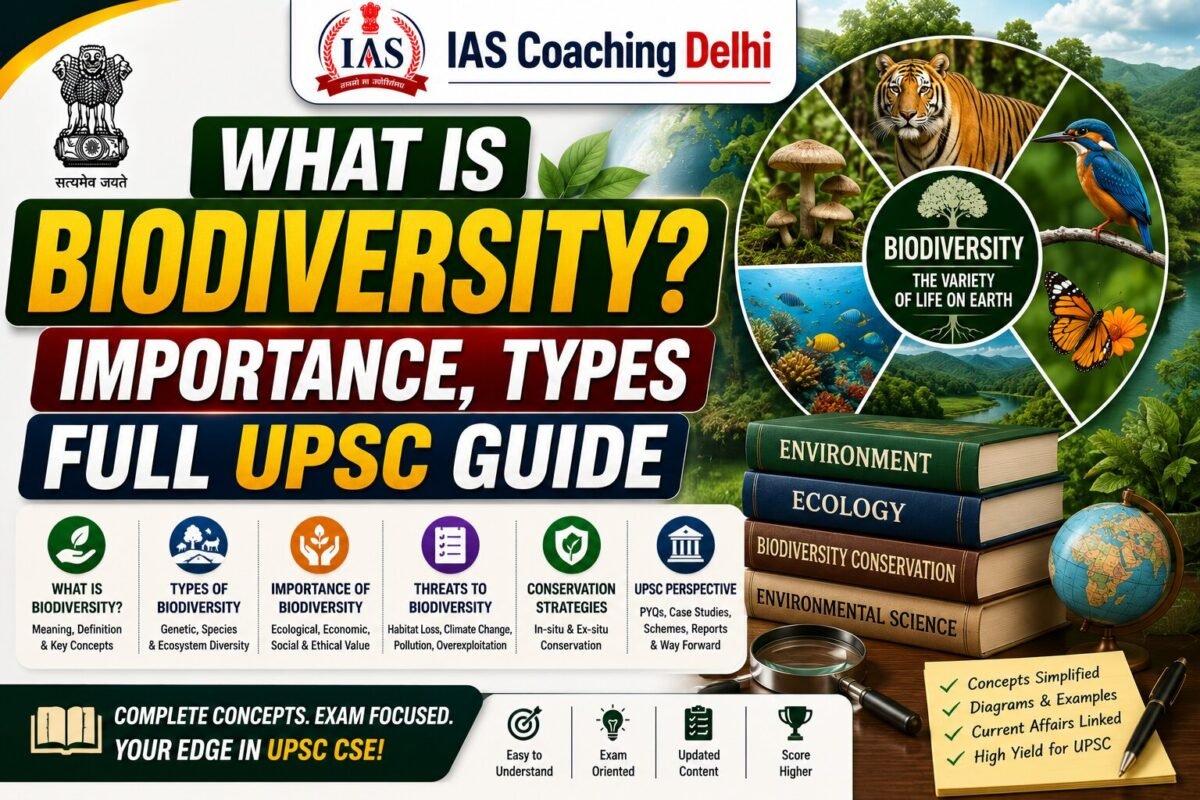
Biodiversity happens to be an extremely critical subject within the UPSC Civil Services Exam, particularly within the Environment and Ecology segment. Each year, questions relating to Biodiversity, its conservation, ecosystems, endangered species, climate change, and policies are asked in both Preliminary and Main Examinations. The basic question here would be – what is biodiversity? This is not just a simple definition exercise but more importantly a means to comprehend and grasp the inter-relationship of life on Earth.
From the point of view of UPSC candidates, a concept-based approach is always better than conventional rote learning. Instead of going through several sources, learning the subject of Biodiversity through a proper and well-thought-out study strategy will help develop a strong foundation and will enhance your ability to write answers. If you are preparing for the UPSC Civil Services Exam, then this subject is sure to help you in strengthening your Environment preparations.
Why Biodiversity is an Important Topic for UPSC
Environment has become one of the highest-scoring sections in the UPSC syllabus. Over the past few years, UPSC has increased the number of questions related to biodiversity, wildlife conservation, climate change, and international environmental agreements.
Questions are often asked from topics like:
- Biodiversity hotspots
- National Parks and Wildlife Sanctuaries
- Endangered species
- Ecosystem services
- Environmental conventions
- Conservation strategies
- Protected areas
- Sustainable development
Because biodiversity connects with Geography, Science & Technology, Agriculture, and Current Affairs, developing a strong understanding of this topic provides an advantage across multiple sections of the examination.
What is Biodiversity?
Biodiversity refers to the variety of living organisms found on Earth. It includes plants, animals, microorganisms, fungi, and the ecosystems where they interact. Simply put, biodiversity represents the richness of life in different forms and the natural balance that supports all living beings.
The concept covers three major levels:
- Diversity within species
- Diversity between species
- Diversity of ecosystems
Every organism, whether large or microscopic, plays a unique role in maintaining ecological balance. Healthy biodiversity ensures food security, clean air, freshwater resources, fertile soil, and climate regulation. This is why biodiversity conservation has become a global priority.
For UPSC aspirants, understanding the concept with practical examples is more useful than memorizing textbook definitions.
Types of Biodiversity
Biodiversity is broadly classified into three categories. Each type has its own significance and is frequently asked in UPSC examinations.
Genetic Diversity
Genetic diversity refers to the variation in genes within the same species. These genetic differences allow organisms to adapt to changing environmental conditions and improve their chances of survival.
For example, different varieties of rice, wheat, and mango found across India represent genetic diversity. A higher level of genetic variation makes species more resistant to diseases, pests, and climate changes.
Species Diversity
Species diversity refers to the variety of different species living in a particular region. Forests, wetlands, coral reefs, and grasslands usually support thousands of different species living together.
India is one of the world’s mega-diverse countries, hosting a remarkable range of flora and fauna. This rich species diversity contributes significantly to ecological stability and natural resource sustainability.
Ecosystem Diversity
Ecosystem diversity includes different natural habitats such as forests, deserts, rivers, mountains, wetlands, mangroves, and marine ecosystems.
Each ecosystem supports unique plant and animal communities. The loss of even one ecosystem can affect thousands of interconnected species and disturb ecological balance.
For UPSC, candidates should understand how ecosystem diversity contributes to environmental sustainability and disaster resilience.
Importance of Biodiversity
Understanding the importance of biodiversity is essential not only for the examination but also for appreciating its role in everyday life.
Maintains Ecological Balance
Every living organism contributes to maintaining ecological stability. Predators regulate prey populations, insects pollinate crops, microorganisms decompose organic matter, and forests regulate climate.
When biodiversity declines, these natural processes become disrupted, leading to environmental degradation.
Supports Food Security
Agriculture depends heavily on biodiversity. Pollinators such as bees, butterflies, and birds improve crop production, while diverse genetic resources help develop disease-resistant crop varieties.
Without biodiversity, global food production would become increasingly vulnerable to climate change and pests.
Economic Importance
Biodiversity supports several sectors, including agriculture, fisheries, forestry, pharmaceuticals, and tourism.
Many medicines are derived from natural plants and microorganisms. Eco-tourism and wildlife tourism also generate employment and contribute to local economies.
Climate Change Mitigation
Forests, wetlands, mangroves, and oceans act as natural carbon sinks. They absorb carbon dioxide and help regulate Earth’s climate.
Protecting biodiversity therefore plays a major role in reducing the impact of global warming.
Biodiversity in India
India is recognized as one of the world’s richest biodiversity regions. Despite occupying only about 2.4% of the Earth’s land area, the country supports nearly 8% of the world’s recorded species.
Several factors contribute to India’s biodiversity:
- Diverse climatic conditions
- Himalayan mountain ranges
- Extensive coastline
- Tropical forests
- Desert ecosystems
- River systems
- Wetlands
This remarkable diversity makes biodiversity conservation a national priority.
Biodiversity Hotspots in India
A biodiversity hotspot is a region with exceptionally high species richness that is under significant threat from human activities.
India contains four internationally recognized biodiversity hotspots:
- Himalaya
- Indo-Burma
- Western Ghats and Sri Lanka
- Sundaland (Nicobar Islands)
These regions are home to numerous endemic species found nowhere else in the world.
Questions related to biodiversity hotspots frequently appear in UPSC Preliminary examinations.
Threats to Biodiversity
Despite its importance, biodiversity continues to face serious challenges due to human activities.
Major threats include:
- Deforestation
- Habitat destruction
- Climate change
- Pollution
- Illegal wildlife trade
- Invasive species
- Overexploitation of natural resources
- Rapid urbanization
Understanding these threats helps aspirants answer analytical questions in UPSC Mains effectively.
Biodiversity Conservation Measures
Conservation efforts focus on protecting ecosystems while ensuring sustainable development.
Some important conservation methods include:
In-situ Conservation
This method protects species within their natural habitats.
Examples include:
- National Parks
- Wildlife Sanctuaries
- Biosphere Reserves
- Conservation Reserves
Ex-situ Conservation
Ex-situ conservation protects species outside their natural habitats.
Examples include:
- Botanical Gardens
- Zoological Parks
- Seed Banks
- Gene Banks
- Tissue Culture Laboratories
Both approaches complement each other and are important for long-term biodiversity conservation.
Biodiversity and UPSC Preparation Strategy
Many aspirants find Environment challenging because they study isolated topics without understanding their interconnections.
A better strategy is to connect biodiversity with:
- Ecology
- Climate Change
- Environment
- Geography
- Agriculture
- Current Affairs
Preparing topic-wise notes, solving previous year questions, revising government reports, and practicing MCQs regularly can significantly improve performance.
A concept-oriented approach also helps in writing better answers during the Mains examination.
Why Choose Professional Guidance for Environment Preparation?
Environment and Ecology have become increasingly dynamic in the UPSC examination. Preparing these topics through scattered sources often creates confusion and increases revision time.
A structured preparation approach can help aspirants understand difficult concepts, revise efficiently, and practice exam-oriented questions. At IAS Coaching Delhi, students receive well-organized study resources, experienced academic guidance, regular test practice, and concept-based learning that aligns with the latest UPSC pattern. This focused methodology helps aspirants strengthen their preparation while developing the analytical skills required for both Prelims and Mains.
International Conventions Related to Biodiversity
UPSC frequently asks questions about global environmental agreements, making this section highly important for aspirants. Understanding these conventions along with their objectives can help in both Prelims and Mains.
Convention on Biological Diversity (CBD)
The Convention on Biological Diversity (CBD) was adopted during the Earth Summit held in Rio de Janeiro in 1992. It focuses on conserving biodiversity, promoting the sustainable use of biological resources, and ensuring the fair sharing of benefits arising from genetic resources.
The three major objectives of the CBD are:
- Conservation of biological diversity
- Sustainable use of biodiversity
- Fair and equitable sharing of genetic resources
Cartagena Protocol
The Cartagena Protocol deals with the safe handling, transport, and use of Living Modified Organisms (LMOs) developed through biotechnology.
UPSC often links this topic with biotechnology, agriculture, and environmental protection.
Nagoya Protocol
The Nagoya Protocol aims to ensure that benefits arising from the utilization of genetic resources are shared fairly between users and providers.
Understanding its purpose is useful for questions related to biodiversity governance and sustainable development.
Ramsar Convention
Although primarily associated with wetlands, the Ramsar Convention also contributes significantly to biodiversity conservation.
India has numerous Ramsar Sites that frequently appear in UPSC examinations, making this topic essential for revision.
Government Initiatives for Biodiversity Conservation
India has introduced several initiatives to conserve its rich natural heritage. Aspirants should focus on understanding the objectives rather than memorizing long lists.
Some major initiatives include:
- National Biodiversity Authority (NBA)
- Biological Diversity Act, 2002
- Project Tiger
- Project Elephant
- Green India Mission
- National Wildlife Action Plan
- National Afforestation Programme
These initiatives reflect India’s commitment to balancing environmental conservation with sustainable development.
Biodiversity and Sustainable Development
Biodiversity is directly linked with sustainable development because healthy ecosystems support human well-being and economic growth.
Its contribution includes:
- Food production
- Clean drinking water
- Soil fertility
- Pollination of crops
- Climate regulation
- Disaster risk reduction
- Livelihood opportunities
Protecting biodiversity ensures that future generations continue to benefit from these essential ecosystem services.
Biodiversity in UPSC Prelims
Questions in the Preliminary Examination are generally factual and concept-based. Aspirants should focus on understanding key terms, protected areas, species, and environmental organizations.
Important preparation areas include:
- Biodiversity hotspots
- National Parks
- Biosphere Reserves
- Wildlife Sanctuaries
- Endangered species
- Environmental conventions
- Conservation methods
- Government schemes
Practicing previous year questions helps identify recurring themes and improves accuracy during the examination.
Biodiversity in UPSC Mains
Unlike Prelims, the Mains examination evaluates analytical thinking and answer-writing skills.
Questions may ask candidates to explain:
- Importance of biodiversity
- Threats to biodiversity
- Conservation strategies
- Climate change and biodiversity
- Role of local communities
- Environmental governance
High-scoring answers usually include:
- Clear definitions
- Current examples
- Government initiatives
- International conventions
- Practical solutions
- Well-structured conclusions
Common Mistakes Students Make While Studying Biodiversity
Many aspirants spend too much time collecting study material instead of mastering concepts.
Some common mistakes include:
- Memorizing without understanding concepts
- Ignoring current affairs related to environment
- Skipping previous year questions
- Not revising regularly
- Depending on multiple books unnecessarily
- Neglecting answer-writing practice
A focused preparation strategy is far more effective than studying from too many sources.
Smart Preparation Strategy for UPSC Aspirants
Preparing biodiversity effectively requires consistency rather than long study hours.
A practical study plan includes:
- Start with NCERT Environment concepts.
- Prepare topic-wise notes.
- Revise biodiversity hotspots and protected areas regularly.
- Follow important environmental current affairs.
- Solve previous year UPSC questions.
- Practice MCQs every week.
- Write short Mains answers on biodiversity topics.
This strategy improves retention and helps connect static concepts with current developments.
Related Topics You Should Study Along with Biodiversity
Since UPSC follows an integrated approach, biodiversity should never be studied in isolation.
You should also prepare:
- Ecology
- Ecosystem
- Food Chain
- Food Web
- Climate Change
- Environmental Pollution
- Wetlands
- National Parks
- Biosphere Reserves
- Wildlife Conservation
- Environmental Impact Assessment
- Sustainable Development Goals (SDGs)
Studying these interconnected topics together improves conceptual clarity and revision efficiency.
Why Biodiversity Remains a High-Scoring Topic
Environment questions have steadily increased in the Civil Services Examination over the last decade. Biodiversity forms the foundation of many environmental concepts and overlaps with Geography, Agriculture, Science & Technology, and Current Affairs.
Students who build conceptual understanding instead of memorizing isolated facts often find it easier to solve application-based questions. A well-prepared biodiversity section can contribute significantly to improving the overall UPSC score.
Conclusion
What is Biodiversity? It is crucial for all UPSC candidates to know about Biodiversity, as it is the basis of the Environment and Ecology syllabus. Biodiversity can be understood through various aspects like Biodiversity conservation, ecosystem diversity, and international conventions, etc., which are asked from time to time in UPSC Prelims and Mains examinations.
Don’t go about preparing for this topic from random sources; instead, try to prepare systematically by way of concept building and revision of concepts along with writing answers.
Frequently Asked Questions
Q.1 What is biodiversity in simple words?
Biodiversity refers to the variety of plants, animals, microorganisms, and ecosystems found on Earth. It helps maintain ecological balance and supports life.
Q.2 Why is biodiversity important for UPSC?
Biodiversity is an important part of the UPSC Environment syllabus and is frequently asked in both Prelims and Mains through conceptual and current affairs-based questions.
Q.3 What are the three types of biodiversity?
The three main types are genetic diversity, species diversity, and ecosystem diversity.
Q.4 Which international convention is most important for biodiversity?
The Convention on Biological Diversity (CBD) is one of the most important international agreements related to biodiversity conservation and is frequently covered in UPSC preparation.
Q.5 How should I prepare biodiversity for the UPSC examination?
Study the basic concepts, revise biodiversity hotspots, protected areas, environmental conventions, government schemes, and solve previous year UPSC questions regularly.